Your Home For Delicious Meat Recipes

Easy Recipe for Mongolian Beef: 4 Essential Flavors

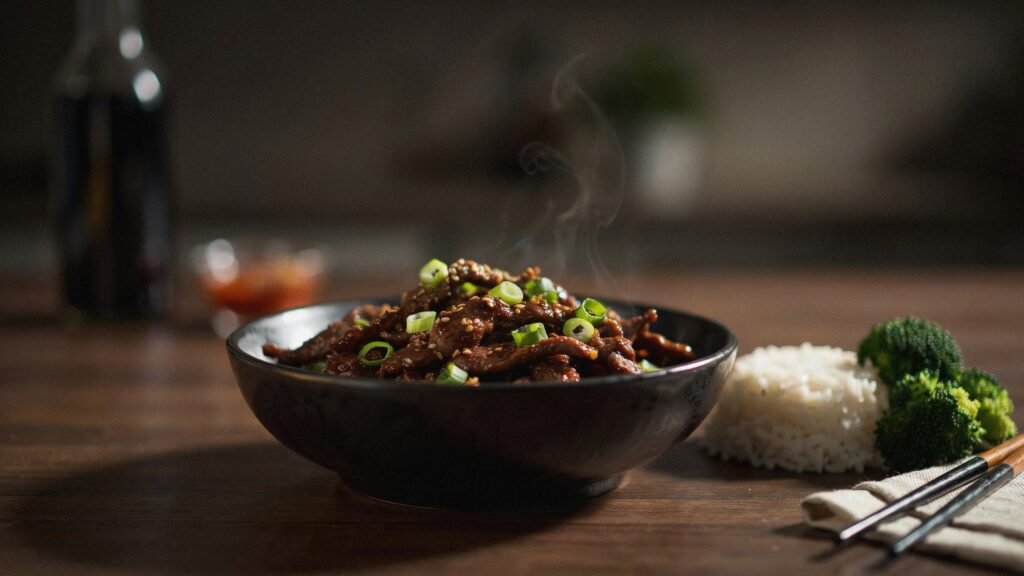
The moment thin strips of beef meet a hot skillet, fresh ginger, and garlic, your kitchen begins to smell like dinner is already worth waiting for. Add a glossy soy-based sauce and fresh green onions, and you have a comforting meal that feels special without requiring a complicated cooking process.
This easy recipe for Mongolian beef gives you tender beef covered in a balanced sauce that is savory, gently sweet, aromatic, and bright. You can prepare everything in approximately 30 minutes using a wok or a wide skillet, making it practical for evenings when you want something more exciting than an ordinary dinner.
Although the familiar restaurant dish carries the name “Mongolian,” it is generally associated with Taiwanese and Chinese American restaurant cooking rather than traditional Mongolian cuisine. This version focuses on an approachable homemade method rather than claiming to be an authentic Mongolian beef recipe or an exact restaurant copycat.
Once you understand how to slice beef properly, control the heat, and balance the sauce, you can use the same techniques in many other Chinese-style beef dishes and quick stir-fries.
Table of Contents
Recipe Overview
| Detail | Information |
|---|---|
| Preparation time | 15 minutes |
| Cooking time | 15 minutes |
| Total time | Approximately 30 minutes |
| Servings | 4 |
| Cooking method | Wok or wide skillet |
| Recommended beef | Flank steak or sirloin |
| Difficulty | Beginner-friendly |
| Flavor | Savory, lightly sweet, garlicky, and gingery |
What Makes This Recipe for Mongolian Beef Work?
This dish depends on a few techniques rather than a long ingredient list. The beef must be sliced correctly, the skillet needs enough heat, and the sauce should be allowed to thicken before the meat returns to the pan.
Four flavor elements create the final result.
1. Savory Depth From Soy Sauce
Low-sodium soy sauce provides the salty, savory foundation. Using a lower-sodium variety gives you more control because the sauce reduces as it cooks.
Taste the finished sauce before adding extra salt. Soy sauce, broth, and other packaged ingredients may already provide enough seasoning.
2. Gentle Sweetness From Brown Sugar
Brown sugar softens the sharper edges of the soy sauce and helps create a glossy finish. This recipe uses enough to provide balance without turning the dish into a particularly sweet copycat.
You can reduce the amount slightly if you prefer a more savory dinner. However, removing it completely changes the character and consistency of the sauce.
3. Warm Aromatics From Garlic and Ginger
Fresh garlic and ginger create the fragrance you notice as soon as the sauce reaches the skillet. They should cook briefly because burned garlic can make the entire sauce taste bitter.
Prepare both ingredients before heating the pan. Stir-frying moves quickly, so you will not have much time to chop ingredients once cooking begins.
4. Freshness From Green Onions and Rice Vinegar
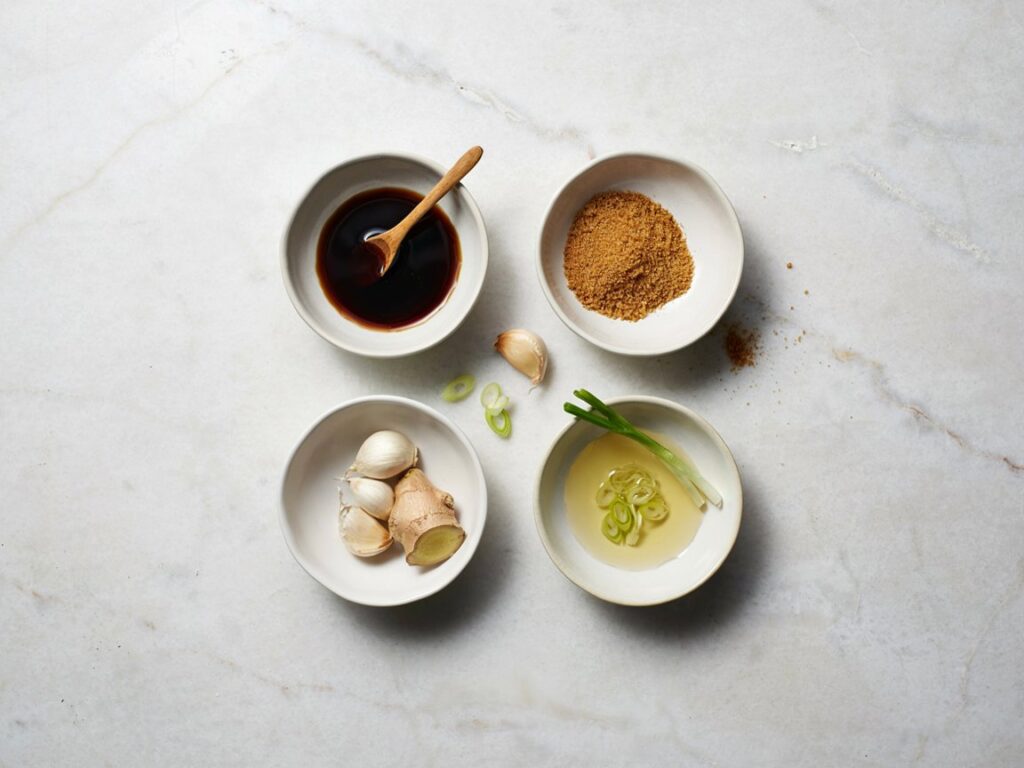
Rice vinegar introduces gentle acidity, preventing the sauce from feeling heavy. Green onions bring color, freshness, and mild onion flavor at the end.
These small additions make the dish feel more balanced without requiring complicated seasonings.
Ingredients You Need
This recipe for Mongolian beef uses ingredients found in many supermarkets. Measure everything before you begin because the cooking process moves quickly.

Ingredients for the Beef
| Ingredient | Amount | Purpose |
|---|---|---|
| Flank steak or sirloin | 1¼ pounds | Main protein |
| Cornstarch | 3 tablespoons | Creates a light coating |
| Black pepper | ¼ teaspoon | Adds mild warmth |
| Neutral cooking oil | 2–3 tablespoons | Helps the beef sear |
Ingredients for the Sauce
| Ingredient | Amount | Purpose |
|---|---|---|
| Low-sodium soy sauce | ⅓ cup | Savory foundation |
| Water or unsalted beef broth | ⅓ cup | Controls concentration |
| Brown sugar | 3 tablespoons | Adds sweetness and gloss |
| Rice vinegar | 1 tablespoon | Balances the sauce |
| Cornstarch | 1 teaspoon | Helps the sauce thicken |
| Fresh garlic, minced | 3 cloves | Adds aromatic depth |
| Fresh ginger, grated | 2 teaspoons | Adds warmth and freshness |
| Toasted sesame oil, optional | 1 teaspoon | Provides a toasted finish |
| Red pepper flakes, optional | ¼ teaspoon | Adds gentle heat |
| Green onions | 4 | Adds freshness and color |
Ingredient Substitutions
- Replace flank steak with sirloin, skirt steak, flat iron steak, or carefully sliced top round.
- Use water instead of broth if you want a cleaner soy-and-ginger flavor.
- Use either light or dark brown sugar. Light brown sugar gives the sauce a milder caramel flavor, while dark brown sugar creates a slightly deeper, richer sweetness.
- Use a clearly labeled gluten-free tamari if necessary.
- Leave out the sesame oil if you have a sesame allergy or prefer a lighter finish.
- Add red pepper flakes only if you want noticeable heat.
Regular soy sauce commonly contains both soy and wheat. Sesame oil introduces another major allergen. Always check the labels when preparing the dish for someone with an allergy or intolerance.
Choosing and Preparing Thin Sliced Beef
The quality of your beef matters, but cutting technique often matters even more. An affordable cut can become tender when you slice it thinly across the grain and cook it quickly.
Flank steak is a strong choice because it has a noticeable grain that is easy to identify. Sirloin has a naturally tender texture and may be easier to find. Skirt steak also works, although its irregular shape requires more careful slicing.
How to Identify the Grain
Look closely at the beef and notice the long lines that cut across its surface. Those lines are muscle fibers. Cutting parallel to them leaves long fibers that are harder to chew. By cutting against them, the fibers are shortened and the meat becomes more tender.
How to Slice the Beef
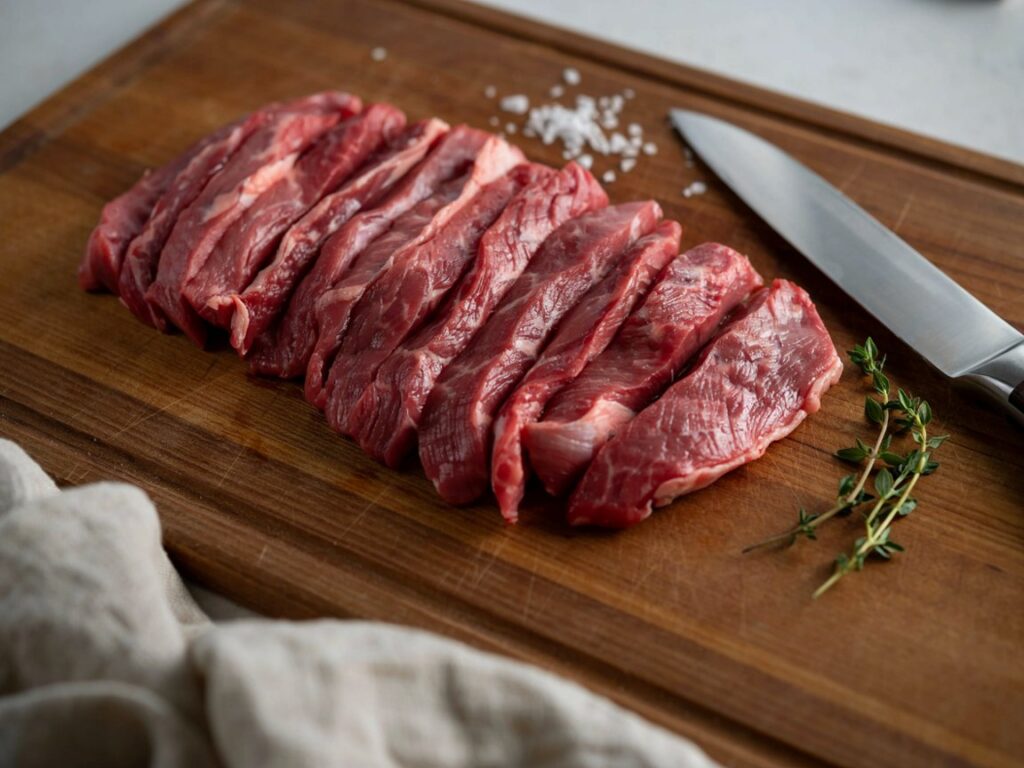
- Set the beef in the freezer for 20 to 30 minutes to firm up.
- Remove it while it is firm but not completely frozen.
- Place it on a stable cutting board.
- Identify the direction of the grain.
- Use a sharp knife to cut across the grain.
- Aim for slices approximately ⅛ to ¼ inch thick.
- Keep the pieces reasonably uniform so they cook at the same speed.
This preparation is useful well beyond Mongolian beef. The same slicing technique works well for beef and broccoli, garlic-ginger stir-fries, pepper beef, and other quick skillet meals where tender, evenly cooked strips are important.
Once you understand how beef preparation affects tenderness, you can apply the same principles to other Chinese inspired dishes. Whether you’re making beef and broccoli or a quick garlic-ginger stir-fry, preparing evenly sized pieces helps the meat cook consistently and gives you better control over the finished texture.
How to Make This Recipe for Mongolian Beef
Arrange the ingredients within reach before turning on the stove. Most of the cooking happens in several fast stages.
Step 1: Prepare the Beef
Pat the beef strips dry with paper towels. Excess moisture can prevent browning and cause the meat to steam.
Place the beef in a bowl and add the black pepper and three tablespoons of cornstarch. Toss gently until each strip has a thin, even coating. The surface should look lightly dusted rather than covered in a thick white layer.
Set the coated beef aside while you prepare the sauce and heat the skillet. Keeping everything ready before the beef hits the pan will make the fast cooking process much easier to manage.
Step 2: Mix the Sauce
In a medium bowl, whisk together:
- Low-sodium soy sauce
- Water or unsalted broth
- Brown sugar
- Rice vinegar
- One teaspoon of cornstarch
- Optional sesame oil
- Optional red pepper flakes
Continue whisking until the cornstarch has dissolved and no dry pockets remain.
Cornstarch settles quickly. Stir the sauce again immediately before pouring it into the skillet.
Step 3: Heat the Pan Properly
Place a wok, cast-iron skillet, or wide stainless-steel skillet over medium-high heat. Allow it to become hot before adding the oil.
A wide cooking surface gives the beef enough contact with the pan. A small or crowded skillet traps steam and prevents the edges from developing color.
Step 4: Sear the Beef in Batches
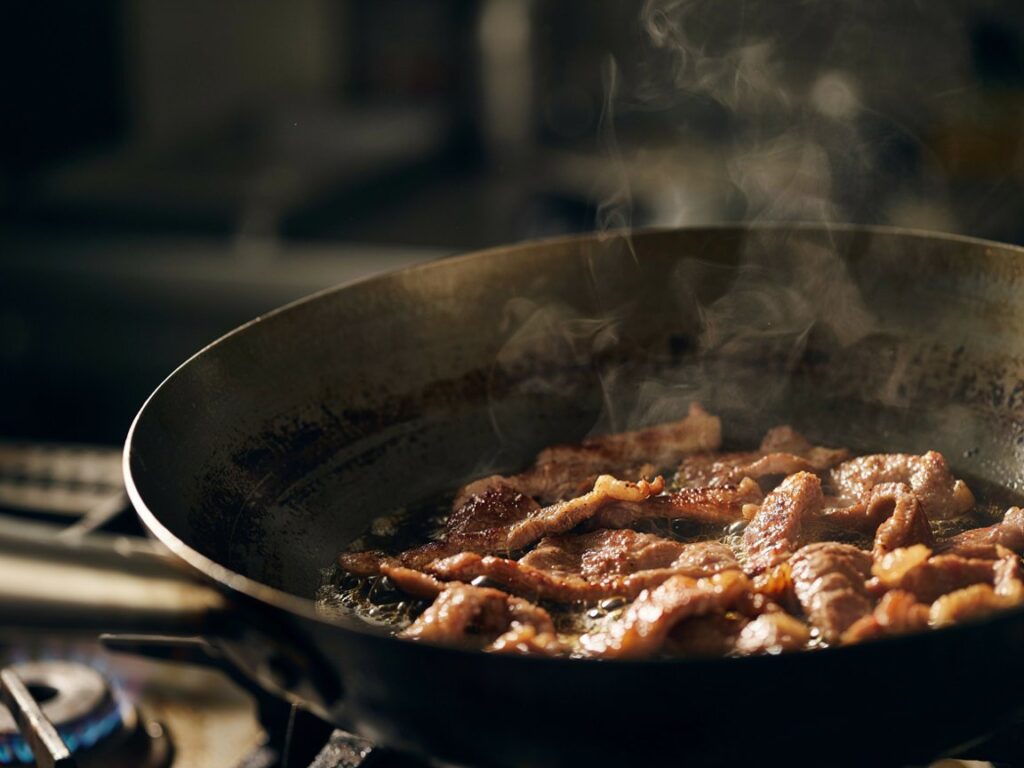
Add enough oil to lightly coat the surface. Arrange part of the beef in one layer, leaving a little space between the strips.
Cook the first side without moving it constantly. Once it develops color, turn the strips and cook the second side. Transfer the browned beef to a clean plate and repeat with the remaining batches.
Avoid placing all the beef in the skillet at once. Cooking in two or three batches takes slightly longer, but it produces a much better texture.
Step 5: Cook the Garlic and Ginger
Lower the heat to medium. If the pan looks completely dry, add a small amount of oil.
Add the garlic and ginger. Stir continuously for approximately 20–30 seconds, just until they become fragrant. Do not allow the garlic to turn dark brown.
Step 6: Thicken the Sauce
Stir the prepared sauce again and pour it into the skillet. Use a wooden spoon to loosen the browned bits from the bottom.
Allow the sauce to reach a gentle bubble. Stir as it thickens, which should take approximately one or two minutes.
The finished sauce should coat the spoon lightly. Remember that it will become slightly thicker when the cornstarch-coated beef returns to the pan.
Step 7: Finish the Dish
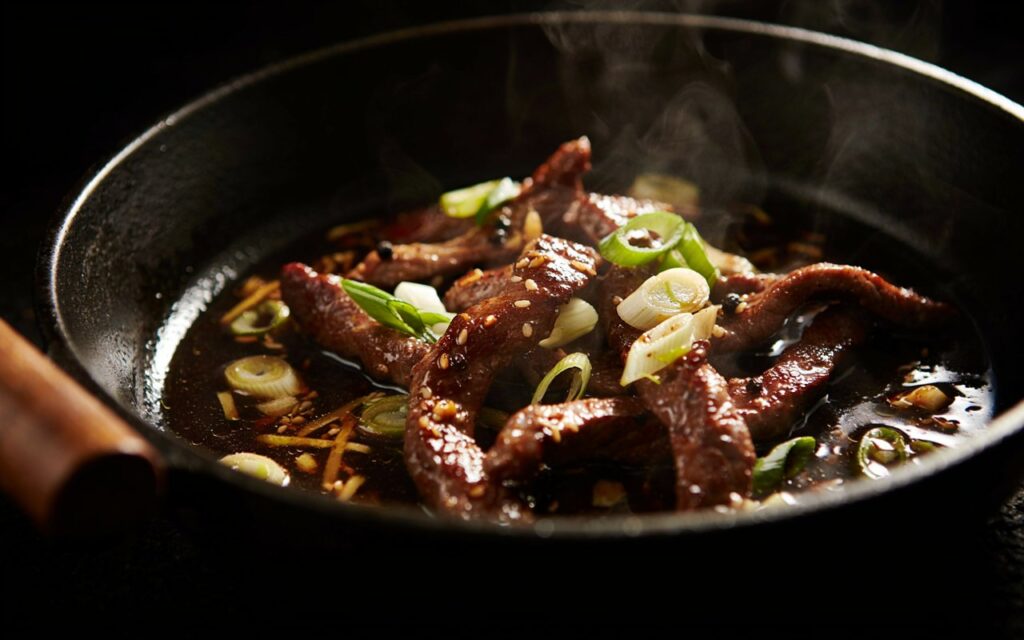
Return the beef and any collected juices to the skillet. Toss until every strip is covered with sauce.
Add most of the green onions and cook for another 30–60 seconds. Remove the skillet from the heat and add the remaining green onions as a fresh garnish.
Cook the beef until the strips are fully heated through and no raw areas remain. When cooking beef at home, use a food thermometer whenever practical and follow USDA guidance for safe minimum cooking temperatures. USDA recommends a minimum internal temperature of 145°F (63°C), followed by a three-minute rest, for whole beef steaks, chops, and roasts.
Why Your Mongolian Beef May Turn Out Chewy
A recipe for Mongolian beef can use the correct ingredients and still produce disappointing meat when the preparation technique is rushed.
The Beef Was Cut With the Grain
Long muscle fibers are harder to chew. Always identify the grain before cutting and position your knife across those lines.
The Slices Were Too Thick
Thick pieces need more time to cook. By the time their centers are ready, their exteriors may already be tough.
If slicing feels difficult, chill the beef briefly before cutting it.
The Skillet Was Overcrowded
When too many pieces enter the pan, its temperature drops. Released moisture remains trapped, and the meat steams instead of browning.
Work in smaller portions, regardless of skillet size.
The Beef Stayed in the Sauce Too Long
The beef is already nearly cooked when it returns to the sauce. It only needs enough time to become coated and heated through.
Keeping it at a strong simmer for several minutes can toughen thin strips.
Common Problems and Simple Solutions
| Problem | Likely Cause | Solution |
|---|---|---|
| Beef feels tough | Incorrect slicing or excessive cooking | Slice across the grain and shorten the final cooking time |
| Beef does not brown | Wet meat or crowded pan | Pat it dry and cook in batches |
| Sauce is watery | Cornstarch settled or sauce did not bubble | Stir the sauce again and let it simmer briefly |
| Sauce is excessively thick | Too much reduction | Add water one tablespoon at a time |
| Sauce tastes too salty | Full-sodium soy sauce or excessive reduction | Use low-sodium soy sauce and dilute carefully |
| Sauce tastes too sweet | Too much brown sugar | Reduce the sugar slightly and add rice vinegar |
| Garlic tastes bitter | It burned in the hot pan | Reduce the heat before adding aromatics |
| Beef coating feels heavy | Too much cornstarch | Use only a thin, even coating |
How to Adjust the Sauce
The sauce is easy to customize once you understand what each ingredient contributes.
For a More Savory Sauce
Reduce the brown sugar by one tablespoon. Do not add more soy sauce immediately because that may make the dish excessively salty.
For a Sweeter Sauce
Add one additional tablespoon of brown sugar if you prefer a sweeter glaze. This brings the sauce closer to the rich, glossy style you may recognize from restaurant versions of Mongolian beef. Add the extra sugar gradually, then taste before making further adjustments so the sweetness does not overpower the garlic, ginger, and soy sauce.
For More Heat
Add:
- Red pepper flakes
- Chili garlic sauce
- Fresh sliced chili
- A small amount of chili oil at the end
Add heat gradually so it does not hide the garlic, ginger, and beef.
For More Sauce
Increase the soy sauce, water, brown sugar, and rice vinegar proportionally. Do not increase only the soy sauce.
You may also need a little additional cornstarch, but add it carefully. Too much creates a heavy or gummy texture.
What to Serve With Mongolian Beef

Steamed rice is the easiest pairing because it absorbs the sauce without competing with its flavor. Jasmine rice, brown rice, and fried rice are all suitable.
You can also serve this recipe for Mongolian beef with:
- Rice noodles
- Lo mein-style noodles
- Stir-fried broccoli
- Steamed bok choy
- Green beans
- Snow peas
- Cucumber salad
- Roasted vegetables
- Cauliflower rice
For a balanced plate, combine the beef with one grain or noodle and one simply cooked vegetable. The sauce already provides strong flavor, so the side dishes do not need heavy seasoning.
If you enjoy quick stir-fries and savory beef dinners, explore our Chinese beef recipes for more ideas using similar slicing, searing, and sauce-building techniques.
Adding Vegetables to the Recipe
Vegetables can make the meal more colorful and substantial, but adding them directly to the beef at the wrong time may lower the skillet’s temperature.
Suitable vegetables include:
- Broccoli florets
- Thinly sliced bell peppers
- Snow peas
- Mushrooms
- Bok choy
- Green beans
- Sliced onions
Cook firm vegetables before the beef or in a separate pan. Transfer them to a plate, cook the beef, and return everything to the sauce near the end.
For softer vegetables such as mushrooms or bok choy leaves, a shorter cooking time is sufficient.
How to Choose the Mongolian Beef Style You Prefer
There are several ways to prepare Mongolian-style beef, and the best choice depends on your preferences. This version keeps the sauce balanced and the cooking process simple, making it ideal for a weeknight dinner. If you enjoy a sweeter, restaurant-inspired glaze, you can adjust the sugar and sauce consistency to achieve a different result.
| Style | Best If You Prefer | Flavor Profile |
|---|---|---|
| Balanced homemade Mongolian beef | An easy weeknight dinner with straightforward steps | Savory, gently sweet, garlicky, and gingery |
| PF Chang’s-inspired Mongolian beef | A sweeter restaurant-style result | Richer sweetness with a thicker, glossy sauce |
| Less-sweet homemade variation | A more savory sauce with less emphasis on sweetness | Soy-forward, aromatic, and balanced with ginger and garlic |
If you prefer a sweeter, glossy restaurant-style version, try our PF Chang’s-inspired Mongolian beef recipe for a richer sauce and a more pronounced sweet-savory finish.
If you prefer a less-sweet version, reduce the brown sugar slightly and let the garlic, ginger, and soy sauce take a stronger role in the finished dish. Keep in mind that the familiar restaurant-style Mongolian beef is not a traditional Mongolian recipe, so homemade versions can vary considerably in sweetness, sauce thickness, and seasoning.
Whichever variation you choose, focus on slicing the beef evenly, cooking it in small batches, and adjusting the sauce to your taste. These simple techniques will help you achieve tender beef and a flavorful glaze, whether you prefer a balanced homemade version or a sweeter restaurant-inspired dish.
How to Store and Reheat Leftovers
Transfer leftover Mongolian beef to a shallow, airtight container and refrigerate it promptly after the meal. Do not leave cooked beef at room temperature for more than two hours, or more than one hour when the temperature is above 90°F (32°C). Shallow containers help the food cool more quickly and evenly in the refrigerator.
Store the rice separately whenever possible. Otherwise, it may absorb most of the sauce and become overly soft.
Refrigerated leftovers are generally best used within three to four days. The USDA recommends reheating leftovers to 165°F and provides additional instructions in its leftovers and food-safety guidance.
Stovetop Reheating
Place the beef in a skillet over medium-low heat. Add one or two tablespoons of water to loosen the sauce, then stir gently until thoroughly heated.
Microwave Reheating
Place one portion in a microwave-safe container. Add a spoonful of water, cover loosely, and heat in short intervals. Stir between intervals to distribute the heat.
Avoid overheating the beef because thin slices can become tough.
Frequently Asked Questions
What is Mongolian beef sauce made from?
The sauce usually combines soy sauce, water or broth, brown sugar, garlic, ginger, and a thickener such as cornstarch. Rice vinegar helps balance the sweetness, while green onions provide freshness.
What is the best cut of beef for Mongolian beef?
Flank steak is the primary recommendation because it has strong beef flavor and is easy to slice across the grain. Sirloin, skirt steak, flat iron steak, and top round can also work.
How thin should you slice the beef?
Aim for slices about ⅛ to ¼ inch thick. Thinly sliced beef cooks quickly and evenly, making it easier to achieve tender pieces without overcooking the exterior. For the best texture, keep the slices as uniform as possible and cut them across the grain.
Can you make Mongolian beef without a wok?
Yes. A wide cast-iron or stainless-steel skillet works well. The important factors are sufficient heat, enough cooking surface, and avoiding overcrowding.
Why did the sauce fail to thicken?
The cornstarch may have settled before the sauce entered the skillet, or the sauce may not have reached a gentle bubble. Stir the mixture immediately before adding it and allow it to simmer briefly.
Is this a pf changs mongolian beef recipe?
No. This is a homemade Mongolian beef recipe rather than an exact copy of PF Chang’s version. It features tender beef, fresh garlic, ginger, and a balanced savory-sweet sauce. If you prefer a sweeter, thicker glaze similar to the restaurant-inspired style, add an extra tablespoon of brown sugar and let the sauce thicken gently until it coats the beef.
Is this an authentic mongolian beef recipe?
No. Despite its name, the Mongolian beef commonly served in Chinese-American restaurants is not a traditional dish from Mongolia. This homemade version features thinly sliced beef, garlic, ginger, and a savory-sweet soy-based sauce. It focuses on recreating the familiar restaurant-style flavors with simple ingredients and a straightforward cooking method.
Can you prepare the ingredients ahead?
Yes. You can slice the beef and mix the sauce earlier in the day. Keep the beef refrigerated in a sealed container and store the sauce separately. Coat the beef with cornstarch shortly before cooking.
Can you use frozen beef?
Yes, but thaw it safely in the refrigerator. Beef that is still slightly firm can be easier to slice, but it should not remain frozen in the center when you begin cooking.
What other meals use the same technique?
The slicing, batch-searing, and sauce-building methods appear throughout many Chinese beef recipes. Once you master them here, stir-fries and other sauced beef dishes become easier to prepare.
Conclusion
A dependable recipe for Mongolian beef does not require restaurant equipment or an oversized ingredient list. The most important steps are slicing the beef across the grain, keeping the pan hot, cooking in batches, and balancing the four essential flavors: savory soy sauce, gentle sweetness, fresh aromatics, and bright finishing ingredients.
Start with the balanced version, then adjust the sweetness, heat, vegetables, and side dishes to suit your taste. Once you become comfortable slicing beef thinly, controlling the heat, and building a glossy sauce, you can apply the same techniques to many other Chinese-style beef dishes.
Prepare the recipe once as written, then make notes about the adjustments you would enjoy next time. If you try it, leave a comment describing the beef cut, vegetables, and side dish you used.